
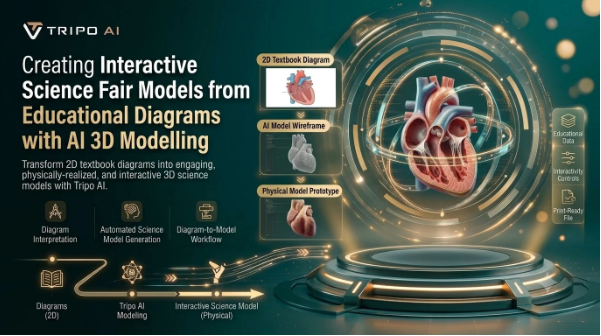
At times, students become curious, and at other times, they are creative; however, many cannot make textbook diagrams come alive. Often, the excitement of scientific concepts doesn't get conveyed in flat drawings.
Educators and students can now use Tripo 3D to turn their educational materials into dynamic learning tools with an image to 3D, bringing science to life, visual and fun to explore.
Where the textbook's diagrams are taken off the page and into the real world
For learners, scientific diagrams are sometimes abstract because they are used to explain processes such as photosynthesis, the solar system, and human anatomy. Students can learn concepts without really understanding how systems relate.
The Tripo 3D transforms that with its ability to convert diagrams and reference photos into interactive 3D models. Students learn about a process by seeing it from all directions, rather than reading about it, and can learn how components interact in real space.
Connecting passive learning to active discovery
Most of the traditional learning methods are based on observation and memorization. They work to some extent, but they don't always promote exploration. Learners can interact with scientific systems, zoom into structures and manipulate models with Tripo 3D. Active participation contributes to the consolidation of the acquired knowledge and its retention.
Educational and inspiring science fair projects!
The purpose of science fairs is to encourage creativity and scientific thinking. But, numerous projects end up being just posters, printouts and static models. With the incorporation of Tripo 3D in the development process, the students can produce interactive exhibits that stand out. Rather than just describing a concept, they can show it in a realistic 3D visualisation.
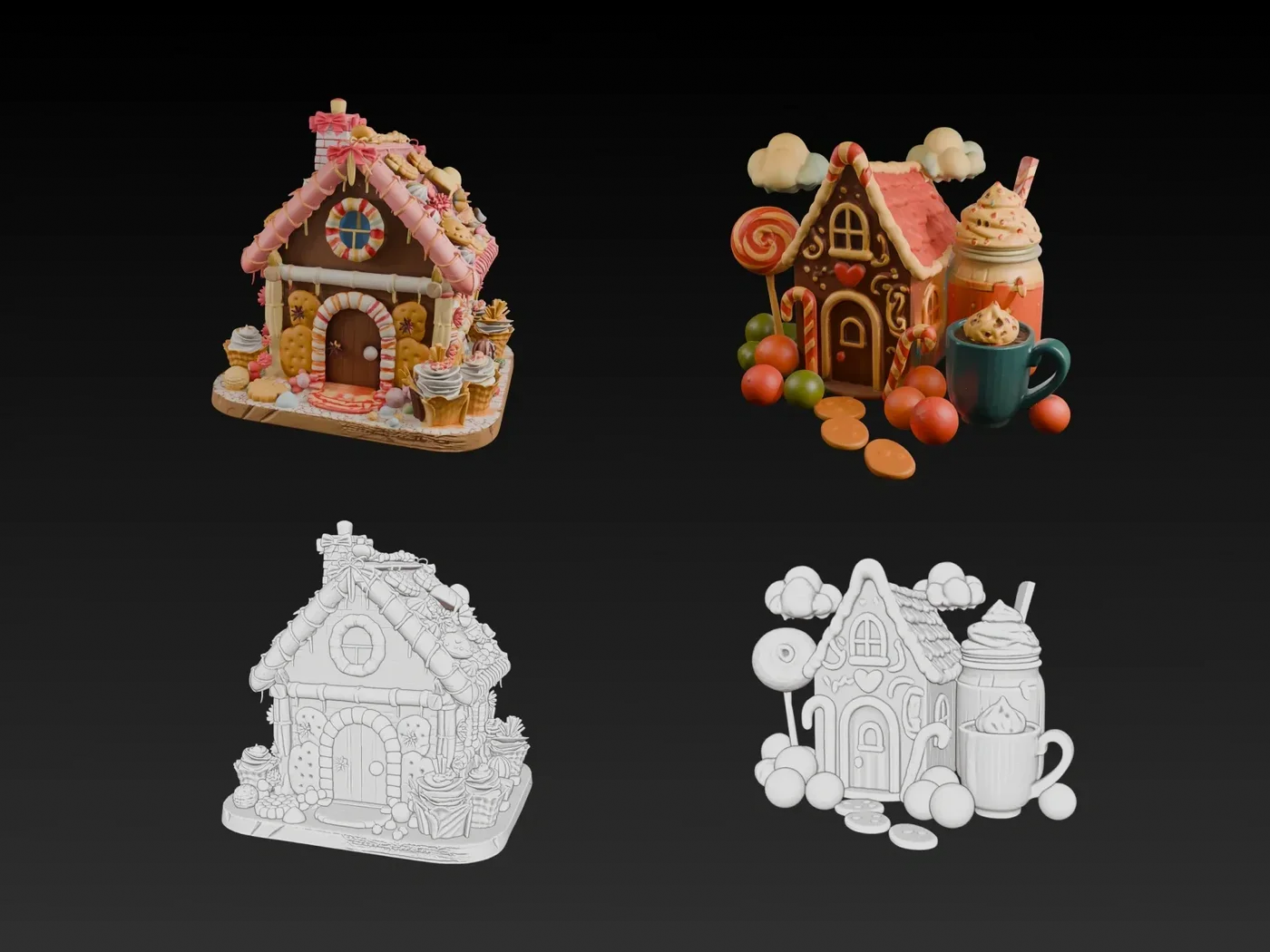
Ensuring students have confidence in presenting their ideas
Being able to present is equally important to having knowledge about science. Students often find it challenging to visualize and articulate ideas in scientific terms. Using 3D models is one effective way of communicating ideas. Presentations are clearer and more powerful when judges and audiences see a concept in action and/or can view it in multiple ways.
Visualizing to unlock deeper understanding
For many complex scientific systems, it is difficult to understand them without a spatial representation. Visualization is a part of understanding in both cases, whether it be a cell structure or a chemical reaction.
Using Tripo 3D software, students can build accurate models from the given drawing, which improves their visualization skills and connects theoretical knowledge with practical application. This makes science much more understandable for all learning levels.
How can STEM education be improved by working with others?
Experimenting and exploring is the essence of STEM education. Interactive models involve students in asking and answering questions to test ideas and investigate scientific concepts in greater detail. Even common reference images can be converted to a more accurate representation using 3D Modeling Web to facilitate experimentation and creative learning.
Convert a diagram to a 3D display model with Tripo 3D
It no longer takes professional know-how to make models for a science fair. Since its inception, Tripo 3D is making the process very easy, empowering students and educators to turn diagrams into actual or digital exhibits in mere a few steps.
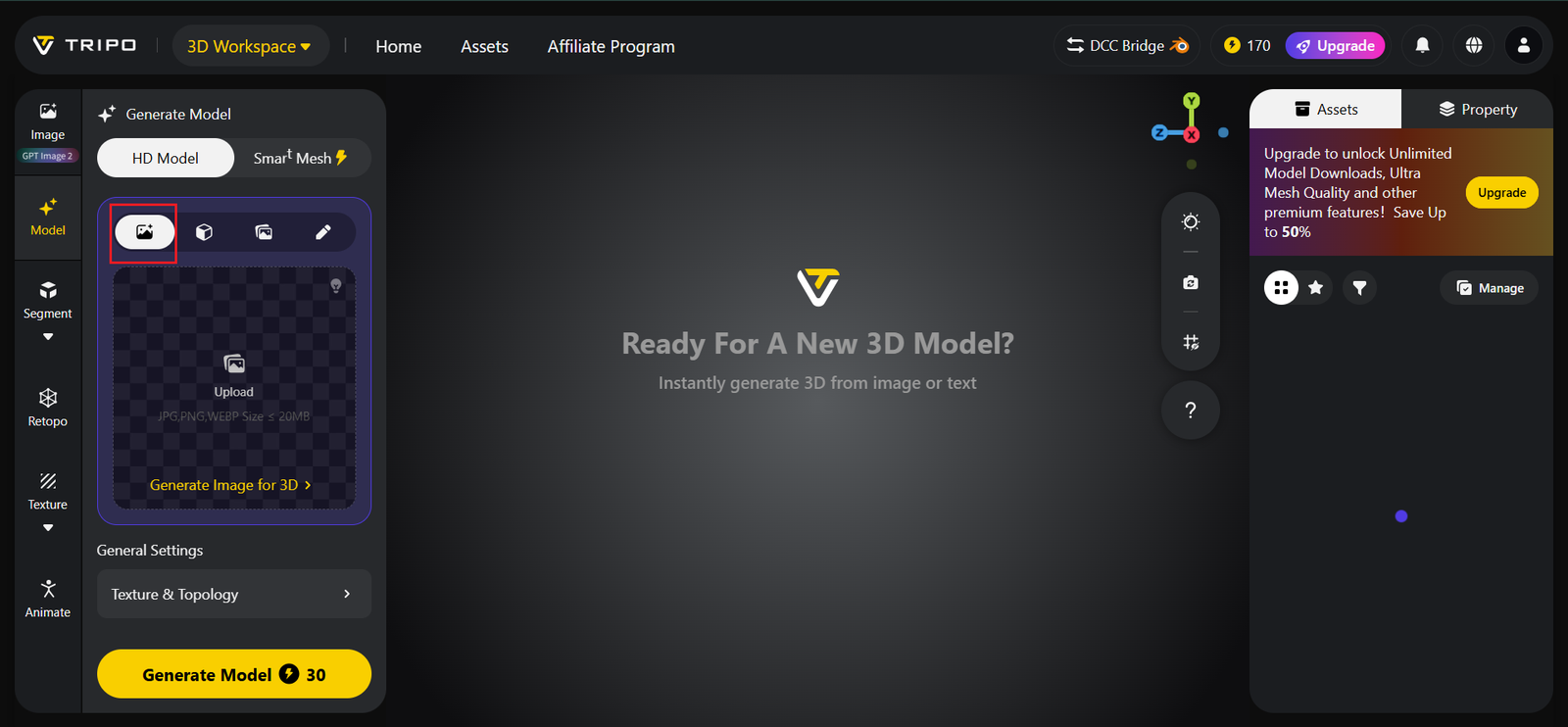
Step 1: Start with Tripo AI
First, open the Tripo AI workspace and choose the suitable input method. If you need to convert diagrams or reference images directly, then Image-to-3D is perfect for science fair projects!
Step 2: Add image and set up the parameters
Upload the picture in the formats of JPG, PNG, or WEBp in order to begin the conversion process. At this point, you need to set the mesh quality and texture resolution according to the project's complexity. If you want a detailed educational model, then use high quality, and if you want a simplified class demonstration, then use optimized quality.
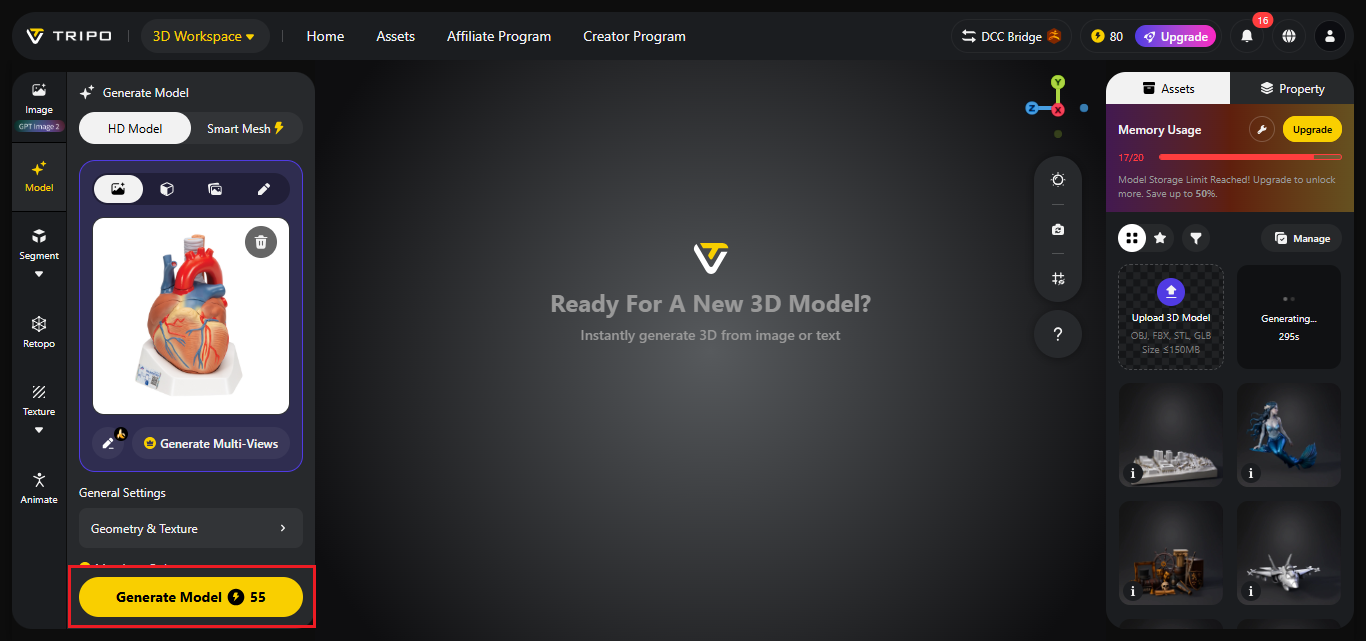
Step 3: Generate & refine
Pressing on "generate" will generate a model, but there are plenty of tools that will allow for the further improvement of its quality and accuracy. These improvements are to guarantee exactitude in science and visual clarity.
Step 4: Export
Once you've completed the model, save it for printing or presentation in the appropriate format. Tripo 3D supports STL, OBJ, FBX, GLB and USD files. The image to STL workflow is a convenient method for making physical science fair exhibits into 3D printed science education models.
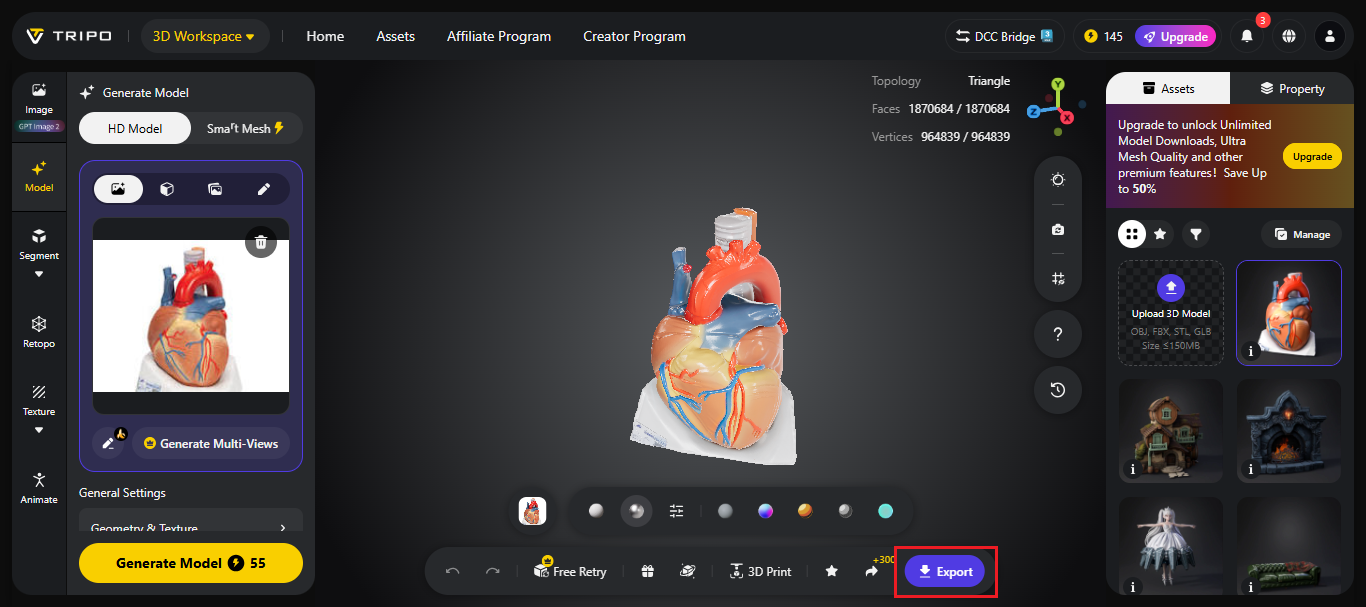
Creating printable science models from educational diagrams
Science fairs become much more interesting when students can illustrate their ideas through interactive models instead of just drawing them. With image to STL technology, teachers and students alike can create printable models of science diagrams which will reflect the real science behind those concepts. Not only does it make it easier to visualize the concept being discussed, but it also fosters hands-on learning, giving the judging panel something to interact with.
Promoting creativity of student projects
If students can use interactive tools, they will be more likely to test out ideas and create new projects. The 3D visualization fosters originality as students can try to modify the models and get creative ideas about the concepts of science.
Fashioning the future of science education through AI modelling
Education is quickly changing, and interactive tools are increasingly becoming the basis for good learning. The 3D production of diagrams provides more engagement, understanding and creativity in science teaching.
In this shift, Tripo 3D plays a pivotal role, transforming traditional educational resources into immersive learning experiences. A series of models to help students understand science more intuitively, either in classroom teaching, science fairs, or self-study. Get started with Tripo 3D today, and see how a simple diagram can turn into a dynamic science fair model, sparking curiosity and making learning come alive.